


Two people each have £20,000 of collectibles on their net worth sheet. One owns a car and a watch. The other owns a binder of trading cards and a designer handbag. The totals match, and the sheets look identical.
When they sell, the tax position can be completely different. Capital gains tax on collectibles turns first on what kind of object something is, and only then on what it fetched.
The £6,000 line
Capital Gains Tax can apply when you sell a personal possession for £6,000 or more at a profit. That’s the rule in gov.uk’s personal possessions guide, and it’s the starting point for anything you collect.
Two details matter straight away. The line is drawn item by item, so each piece in a collection is judged on its own sale price. And if you own something jointly, each owner’s share of the sale price is measured against their own £6,000 limit.
Sell a possession for less than £6,000 and there’s no tax on the gain. At £6,000 or more, the answer depends on what the object is.
Which things are exempt
Gov.uk names two exemptions that cover a lot of what people collect.
Cars. The guide exempts your car, unless you’ve used it for business. A classic car kept as a hobby isn’t taxed on its gain. Valuing an ordinary car is a separate question, with its own article.
Possessions with a lifespan under 50 years. Gov.uk’s limited lifespan page says you don’t pay Capital Gains Tax on these, and that the category covers all machinery, including things like antique clocks or watches. Business use changes the position: tax can be due where the item qualified for capital allowances.
Anything else sold for £6,000 or more usually falls within the rule. Trading cards, handbags and trainers aren’t named as exempt. HMRC’s manual says an item’s predictable life depends on why it was bought, and its list of chattels typically treated as lasting longer than 50 years includes stamps, coins, jewellery, and models and toys.
| Item | Exempt? | Why |
|---|---|---|
| Car | Yes, unless used for business | Named exemption |
| Watch | Generally yes, per gov.uk’s machinery wording | Limited lifespan |
| Trading card | Usually not | Not named as exempt; life judged per item |
| Handbag, clothing | Usually not | Not named as exempt; life judged per item |
The table is a reading of the gov.uk pages. Whether a particular watch, card or bag counts as exempt is the kind of question an accountant answers about the item in front of them.
Verdly publishes for education, not financial advice. This describes how the rules work as gov.uk sets them out. Your circumstances will differ, so speak to a regulated adviser or an accountant for decisions specific to you.
Sold between £6,000 and £15,000
Selling a taxable item for just over £6,000 doesn’t put the whole gain in scope. The work out your gain page sets out a three-step calculation for items sold for between £6,000 and £15,000:
- Subtract £6,000 from the amount you received.
- Multiply the result by 1.667.
- Compare that with your actual gain and use the lower amount.
A worked example. You bought a trading card for £2,000 and sold it for £8,000.
- Actual gain: £8,000 minus £2,000 = £6,000
- Step 1: £8,000 minus £6,000 = £2,000
- Step 2: £2,000 × 1.667 = £3,334
- Lower of £6,000 and £3,334: the capital gain is £3,334
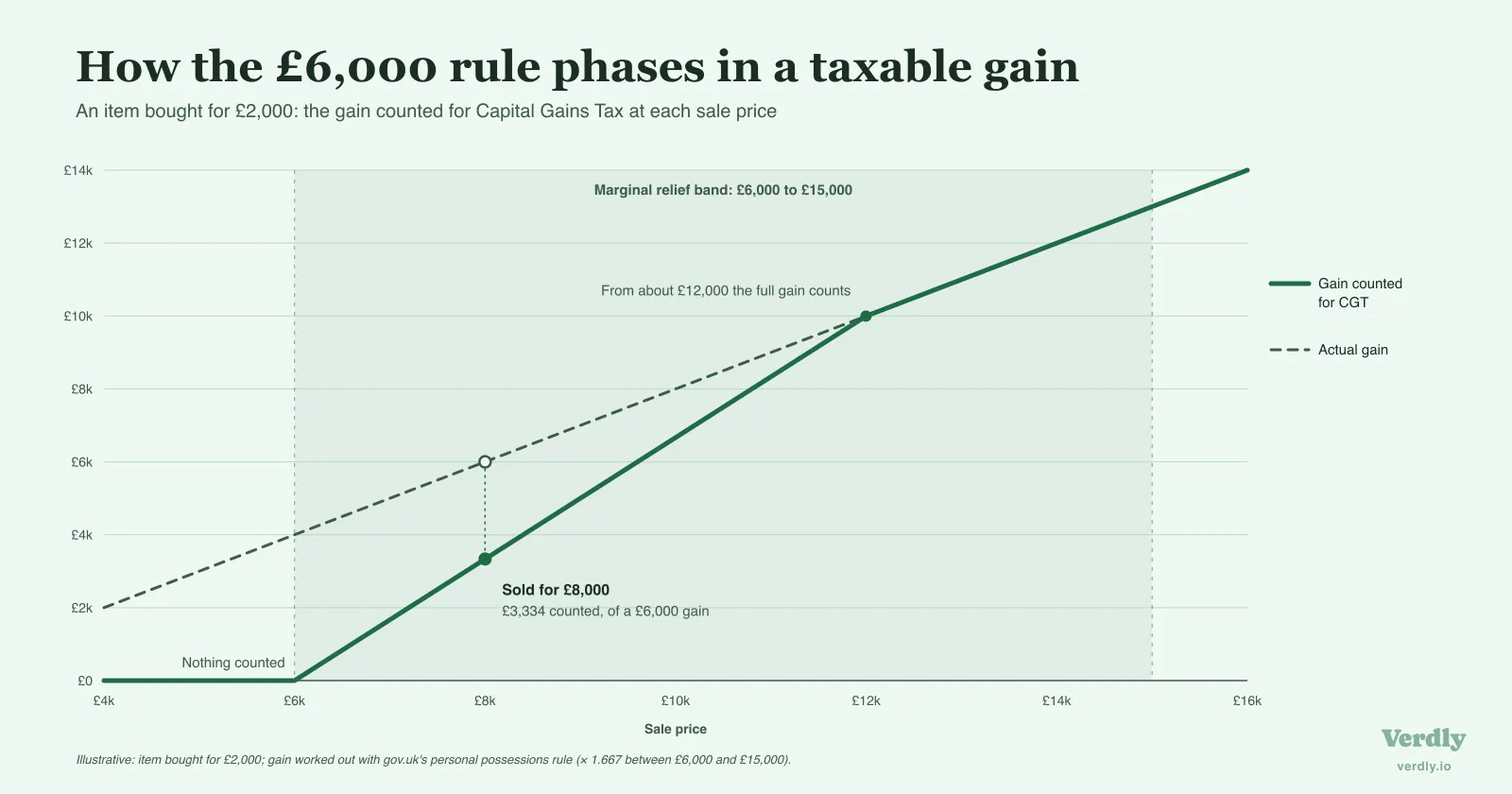
That £3,334 goes into your total gains for the year, alongside anything else you’ve sold. The annual exempt amount is £3,000 in the 2026 to 2027 tax year, and gains above it are charged at 18% within the basic rate band and 24% above it.
For sales above £15,000 the three-step calculation on that page doesn’t apply, and the rest of the gov.uk guidance is where to look.
Losses are calculated differently
If you sell a taxable possession for less than £6,000, you can claim a loss, but the guide says to work it out by using £6,000 as the amount you sold it for.
A worked example. You bought a handbag for £10,000 and sold it for £4,000. You’ve lost £6,000 in cash terms. For tax, the loss is £10,000 minus £6,000, which is £4,000.
Sets
Collections often come as sets, and gov.uk’s examples include chessmen, books by the same author and matching vases. Its sets page says that selling all or part of a set to the same person for less than £6,000 isn’t taxed. Parts sold to different people are assessed separately, unless the buyers are connected to each other or acting together.
What this means for the sheet
On a net worth sheet, a collection goes in at what it would realistically sell for today, before any tax a sale might bring.
What the tax rules add is a short list of things worth recording beside each item:
- What you paid, and when
- What type of object it is
- Any business use
- Whether it belongs to a set
The purchase price is the number every calculation above starts from. It’s easy to note on the day and hard to reconstruct years later, so it belongs with the receipt in your own records. Setting up a holding for each item keeps the car, the watch and the cards on separate lines.
Two people with £20,000 of collectibles look alike on paper. The sheet that records what each item is makes the difference visible long before a sale.